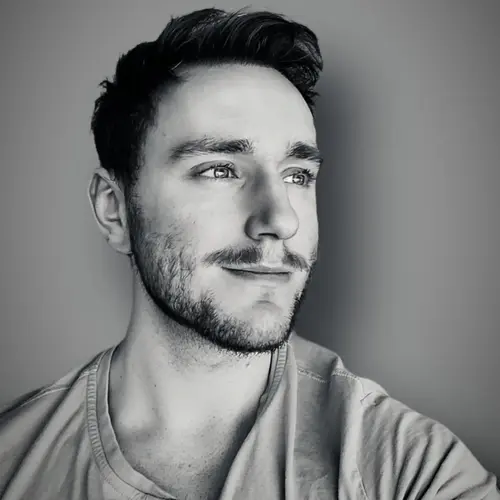
About Arthur Parish
Arthur Parish is an author, researcher and communication analyst. His work is based in a decade of experience in linguistics, philosophy, psychological influence and relationship dynamics.
His work explores culture and people through the lens of language, behaviour and our relationships. Many of his essays and think pieces blend depth of introspection with grim or challenging emotional themes. His style takes inspiration from prominent literary fiction & narrative non-fiction, such as In The Dream House by Carmen Machado or Moonwalking With Einstein by Joshua Foer.
Alongside the narrative and essay content, Parish maintains a professional portfolio of informational content around relationships, the craft of writing, linguistics and other related topics.
Parish aims to make more accessible how our thoughts, feelings and actions shape our identities and our decision-making in modern life. He currently lives in Australia.
Ideas and stories are given to us constantly, from a lot of places. It’s how we navigate the world. We all need help to understand those ideas and how they affect us.
What I try to do with my work is demonstrate that with a certain way of thinking, everything can be broken down and made comprehensible. I’ve been helped greatly by modern psychology, which often uses understanding as a catalyst for change. I think stories and imagination can do something similar for us.
Background & F.A.Qs
How did you get here? What do you stand for?
+
I find that the ‘best’ personal platforms are built from an altruistic application of the things individuals believe in their hearts. For me, it’s the following—we are given ideas and stories from every corner of our lives. It’s how we navigate the world. We all need help to understand those ideas and how they affect us.
It’s not all grandiose, insidious assumptions either, there are plenty of these inherited norms and premises that we use to go about our days just fine, like the idea that we should put clothes on before going outside, or the universal agreement to all individually pat our pockets down before leaving the house. My argument has always been that ideally, you want more control over these things. You want to know what’s affecting you and why—because when you understand something, you have power over it.
That’s how the tagline came to be; ‘Deconstructing Modern Ideas’ represents the idea I’ve always been fascinated by, that you can wrangle almost anything in your world into submission if you take a good faith crack at understanding it. That’s the theme that runs through all my essays and books—exploration for the sake of empowerment. I ought to put that on a T-shirt.
What is the point of this site?
+
This website is many things—a portfolio, a place to sell books, a journal, a blog, an educational resource and a hub for my professional activities.
We are seeing an uptick of personal branding and micro-influencers in expert niches, alongside an incredible downturn in confidence regarding the viability of exclusively writing and publishing as a career. This is somewhat dejecting to me as an author, but encouraging to me as a comms professional and a human being.
If I could sit in a cabin in the woods and scribble prose to myself for a living, I would. Unfortunately, we all must contribute to society in order to be rewarded with currency that allows me to purchase goods and services.
This website is my attempt at leveraging my experiences, passions and expertise into doing exactly that in a manner I find personally and professionally fulfilling.
What credentials do you have? Why should I trust your word on anything?
+
I do occasionally find this question in my inbox, typically from people wondering if I have an academic background in any of the subjects I speak on—particularly psychology or similar.
To be clear, I don’t have a degree in psychology by any means, and I’m certainly not any form of registered mental health professional. The closest I ever got was my time as a certified hypnotherapist, which whilst deeply informative about human nature, is not a stand-in for a bachelor’s degree, a doctorate, or professional mental health qualifications.
My education and qualifications are in business and marketing—my career started in advertising and copywriting, then B2B communications. On the freelance side, I’ve done many years of coaching/consulting and seen a wide variety of people doing all manner of things, personal, professional or otherwise.
The common thread in my occupations has always been people and how they relate to one another. It is my contention that our interactions, relationships, and how we represent ourselves are fundamentally shaped by the language and soft skills we employ.
So, when it comes to the effects of language on human behaviour, my experience and research inform my analysis and insights. My aim is always to offer clarity and practical perspective. When I venture into other topics, it is always from my own experiences and/or sources I’m willing to trust. If I’m wrong or you disagree with something I’ve written, then so be it—nobody is going to nail everything in life.
Is Arthur Parish a pseudonym?
+
Yes—Arthur Parish is a pseudonym (aka. a pen name). This isn’t a secret—many people in all parts of my life know me under either version of my names.
Whilst I’ve never been averse to using my real name for publishing or online content, there were a number of advantages to a pen name that justified the decision in my opinion:
- A degree of separation between the personal and the professional – before my career first got started, I didn’t want to influence job opportunities or prospective employers/clients whilst I figured out my niche and my voice.
- Decreased personal spillover – whilst it didn’t entirely remove unwanted parasocial attention from my life, it did give me a sense of comfort to be at least partially anonymised.
- Aesthetic – I think a pen name makes it cleaner to distinguish the person from the author. Often creative or content projects involve a degree of hyperbole or exaggeration for the sake of getting one’s point across, and it helps me to keep the two separate.
What is my research process & methodology behind my writing?
+
As may be evident from my essays and educational pieces, the format and content vary wildly.
It would be false to imply in any way that my methodology for when I make claims is anywhere near as rigorous as a scientific submission to a journal—I am not an academic publisher.
What I focus on is practicality and approachability—what models and structures of thought can help contribute to the real problems being faced, and what information I understand to be accurate helps to convey those messages.
Where possible, I cite sources and attempt to corroborate my own assertions. However, the soft sciences can be a nebulous and often unverifiable field. There is a limit on what one can glean through peer reviewed double blind studies alone—and much of one’s experience in this industry is going to be shaped by circumstances such as culture and context.
This does not mean I am comfortable espousing things without a shred of evidence—just that in many cases, expert opinion can be as high a standard of evidence as is accessible on a topic. If data and analytics are unavailable, I will gladly turn to the opinions of myself and others in my field and am personally happy to take them at their word—assuming what they say works.
As an analogy—the structure and content of a door-to-door sales pitch is never going to feature in an academic paper. Thus, we turn to the experts for their opinion—the salesmen themselves.
If I have gotten something wrong, misrepresented a concept or research exists that supports/contradicts a point I’ve made, please reach out to me at arthur ~at~ arthurparish.com and I will happily take it under advisement.
